UN expert calls for Mundubile-Makebi release as treason case draws scrutiny

Breaking News Zambia
News🇿🇲 INSIGHT | UN expert calls for Mundubile-Makebi release as treason case draws scrutiny A United Nations human rights expert has called for the release of political detainees in Zambia, bringing fresh international scrutiny to the detention of opposition leader Brian Mundubile, his running mate Makebi Zulu and others caught up in a widening post-election […]
🇿🇲 INSIGHT | UN expert calls for Mundubile-Makebi release as treason case draws scrutiny
A United Nations human rights expert has called for the release of political detainees in Zambia, bringing fresh international scrutiny to the detention of opposition leader Brian Mundubile, his running mate Makebi Zulu and others caught up in a widening post-election security investigation.
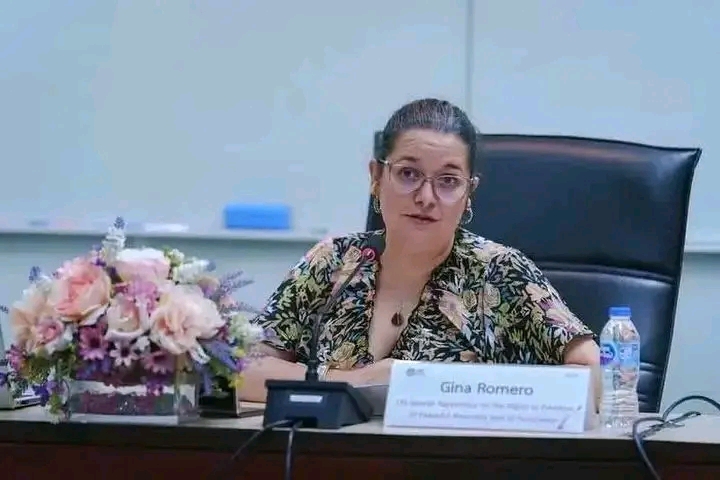
Gina Romero, the UN Special Rapporteur on the rights to freedom of peaceful assembly and of association, says she is gravely concerned about Zambia’s human rights environment following the August 13 general election.
Romero cited reports of intimidation, arrests of opposition supporters, prolonged detention, violence and restrictions on political activity. She urged authorities to “immediately cease the criminalisation of political dissent” and called for political detainees to be released.
Her concern extends directly to the treason proceedings involving Mundubile and Zulu. The two opposition leaders, together with 16 other accused persons, have been transferred to Mukobeko Maximum Security Prison.
Romero described treason proceedings against senior opposition figures as a “dangerous precedent” within a wider pattern she believes points to shrinking civic space.
There is, however, an important institutional distinction. Romero is an independent expert appointed by the UN Human Rights Council. She does not speak for the UN Secretary-General or for the United Nations collectively. Her intervention carries the authority of an international human rights mandate, but it is not an order from the UN to the Zambian government.
And this is where the story becomes more complicated than the political narratives now competing around it.
The State does not describe Mundubile and Zulu simply as opposition politicians arrested for challenging President Hakainde Hichilema. Authorities say they are investigating alleged treason and a wider national security operation involving weapons, an alleged militia and suspected foreign-linked military activity.
The investigation intensified after the August 14 security operation at Mundubile’s Kabulonga residence. Former Cabinet minister Mutotwe Kafwaya was shot dead during the operation.
Police have said officers encountered armed resistance and later reported recovering AK-47 rifles, ammunition, an automatic UZI, tactical equipment and other items. Mundubile disputes the State’s account. He denies operating a militia and says Kafwaya was shot inside his bedroom during the security operation.
Those are profoundly different accounts of the same event. Neither should be converted into established fact before evidence is tested. There are also unanswered questions surrounding the conduct of the opposition leaders themselves
After the Kabulonga operation, Mundubile and Zulu sought protection at United Nations premises in Lusaka. That decision deserves scrutiny alongside scrutiny of the State.
Why did the two men believe they needed the protection of an international institution rather than immediately submitting themselves to investigators? What information did they have about their personal security? Did they fear unlawful arrest, physical harm or something else? What representations did they make to UN officials when seeking protection?
Those questions matter because their stay at the UN compound became an extraordinary episode in Zambia’s post-election crisis.
But another set of questions follows.
If the UN system considered the two men to be political detainees at risk of persecution, why did its representatives subsequently allow a process leading to their departure from UN premises and entry into Zambia’s legal system?
The record available so far provides part of the answer, but not all of it.
On August 27, Zambia’s eight Church Mother Bodies stepped in as a neutral third party. Their statement was unusually precise.
“We, the Eight Church Mother Bodies, receive Hon. Brian Mundubile and Hon. Makebi Zulu from the Office of the Special Assistant to the United Nations Secretary-General and the United Nations Resident Coordinator in Zambia, in our limited but important role as a neutral Third Party, for onward handover to their legal representatives so that the due processes of law concerning matters raised by the State may commence,” the churches said.
This means the sequence was not UN to police.
It was UN to the Church Mother Bodies, then to the men’s legal representatives, followed by the State’s legal process. The churches also disclosed something important about the negotiations surrounding the transition.
“We appreciate the confidence of the United Nations, the trust extended by the State, and the acceptance by the two opposition leaders for the Church to facilitate this brief but critical transition,” they said.
That suggests a negotiated mechanism involving several parties rather than a forcible removal from UN premises. The churches further said assurances had been given “at the highest level” concerning humane treatment, dignity, fairness, due process and the rule of law.
Those assurances now deserve examination.
What precisely was promised? Who gave the assurances? Were conditions attached to the departure from UN premises? Did the discussions concern only personal safety and legal representation, or did they extend to detention conditions and access to lawyers?
And crucially, have those assurances been honoured since the men entered State custody? These are legitimate questions for both the Zambian authorities and the UN system.
There is no contradiction in principle between the earlier UN-facilitated transition and Romero’s intervention. Different parts of the UN system have different mandates, while an independent Special Rapporteur can criticise subsequent arrests or detention practices even after UN officials helped facilitate a peaceful transition into legal proceedings.
But the sequence requires fuller explanation if the public is to understand what happened.
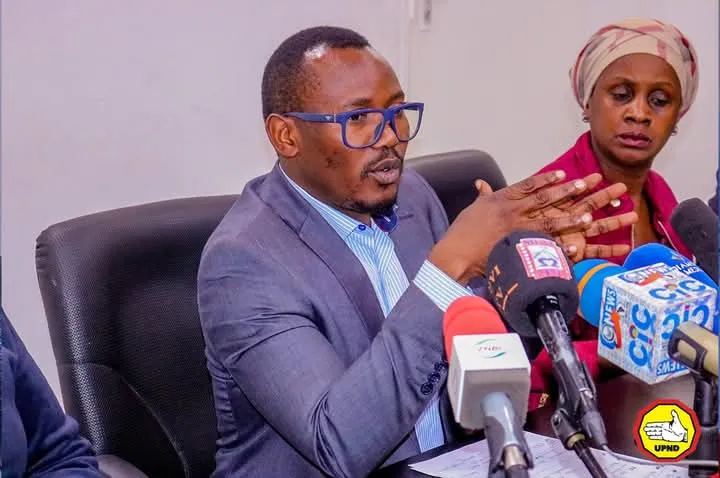
Mundubile and Zulu’s lawyer, Milner Katolo, has now widened the conversation further. He wants the African Union and SADC to encourage engagement between the State and his clients.
Katolo says no negotiations are currently taking place between the defence and government, although he referred to preliminary discussions involving the Church Mother Bodies and the UN.
This raises another difficult question: what exactly would be negotiated?
If the State’s case concerns an alleged armed conspiracy amounting to treason, it must explain how such allegations could appropriately become the subject of a political settlement. If the defence believes the prosecution is political, it must challenge the evidence and legality of detention before competent courts.
Regional mediation can help lower political temperatures. It cannot substitute for criminal evidence. The same principle applies to Romero’s demand for releases.
If some people are being detained solely for peaceful political activity, authorities should account for those detentions and release anyone held without lawful basis. But where individuals face specific allegations involving weapons, violence or preparations against the State, the public needs to know precisely what evidence supports those accusations.
Political status should neither create immunity from prosecution nor become a shortcut to prosecution.
This is the institutional test. There is also a danger in collapsing several separate disputes into one.
Concerns over election administration are not automatically evidence of political persecution. Human rights concerns do not establish innocence in a treason investigation. The discovery of weapons, if proved, does not by itself establish the guilt of every person detained. And Hichilema’s electoral victory does not remove the government’s obligation to respect due process.
Each question requires its own evidence.
This is especially important after Hichilema used his inauguration address to tell the country: “The person who voted against us is not our enemy.”
“There should be no humiliation of the person who voted against us,” he said. “They are our brothers, they are our sisters.”
Those words now sit beside one of the most serious security cases of his presidency.
For Mundubile and Zulu, questions remain about why they sought UN protection and what they told officials while there.
For the United Nations, there are questions about the circumstances under which protection was provided, what assurances preceded the men’s departure and how Romero’s subsequent concerns relate to those arrangements.
For the State, the burden is heavier still. Treason is not an ordinary political accusation. Authorities will eventually have to show the evidence connecting each accused person to the alleged offence, explain the basis for continued detention and account for the circumstances surrounding Kafwaya’s death.
And for those demanding the unconditional release of everyone detained, another question remains: how should credible allegations involving firearms, an alleged armed structure and possible foreign-linked training be investigated if evidence exists?
These questions do not weaken scrutiny. They are the scrutiny.
Zambia does not need a choice between accepting the government’s entire account and accepting the opposition’s entire account. It needs evidence, functioning courts and institutions willing to explain their decisions.
The political contest ended at the ballot box. The dispute now unfolding is about the exercise of State power after it.
-The People’s Brief | Ollus R. Ndomu

Community Feedback